Index
- What Will Change on October 1, 2026
- How much does it cost exactly in Spain?
- How the Pricing Model Works
- What exactly changes in a table?
- How Your Bill Changes Depending on How You Use WhatsApp
- What to Do Before October 1
- A note on automatic replies
- Frequently Asked Questions
- Lessons on WhatsApp Business’s Price Changes
The WhatsApp bill is higher than last month, and no one on the team can explain why. No new campaign has been launched. The contact list is the same. The volume of conversations is similar. And yet the amount doesn’t add up.
This is a scenario that will play out at many companies starting in October. Not because anyone has done anything wrong, but because Meta has changed the rule that determined which messages are charged for and which are not.
Below is the full explanation, including Meta’s official rates for Spain in euros: what’s changing, when the changes take effect, exactly how much it will cost, and what you should check before October 1. No need to panic, because the honest answer is that many Spanish companies will be affected far less than the headlines suggest.
What Will Change on October 1, 2026
Three things—and it’s best to read them together because, taken separately, they can be misleading:
- Service messages are now subject to a charge. These are the free replies your business sends within the 24-hour response window. They are free of charge as of November 1, 2024.
- The utility templates in that window as well. They’re free today. Starting in October, they’ll be billed just like any other template.
- Each business number receives 1,000 free service messages per month. They do not roll over; they reset each month and are not shared among numbers.
That third point is the one almost no one is talking about, and it’s the one that determines whether the change affects you or not.
Before we continue: This only affects the API, not the app.
If your team uses WhatsApp Business—the free app that’s installed on a mobile phone and used by a single person—nothing will change for you. The change affects the WhatsApp Business Platform (the API), which allows multiple people to respond from the same number and enables automated messages. That API is almost always accessed through a BSP (Business Solution Provider, an official provider such as Woztell, Blip, or Spoki), and the change applies regardless of which one you use: Meta sets the rate, not the provider. The BSP adds its own markup on top of that rate, which is a separate layer.
How much does it cost exactly in Spain?
These are Meta’s official rates for recipients in Spain, in euros, effective July 1, 2026. These rates apply per message delivered to a Spanish number, not including any additional charges from your service provider.
| Message Category | Per-message rate |
|---|---|
| Marketing | 0.0585 € |
| Utility | 0.0166 € |
| Authentication | 0.0166 € |
| Service (through September 30) | Free |
| Service (effective October 1) | 0.0166 € |
The statistic that most shapes the conversation is the first one: in Spain, a marketing team costs more than three times as much as an operations team. And when service fees are charged, they are billed at the operations rate, not the marketing rate.
If you write to customers outside of Spain
The price depends on the recipient’s country, not yours. What matters is the prefix of the number you’re calling, and the differences are significant. For a Spanish company that sells abroad, these are the most common markets:
| Recipient’s Market | Marketing | Utility and Authentication |
|---|---|---|
| Spain | 0.0585 € | 0.0166 € |
| Rest of Western Europe (Portugal, Ireland, Belgium, etc.) | 0.0490 € | 0.0142 € |
| Italy | 0.0658 € | 0.0248 € |
| France | 0.0712 € | 0.0248 € |
| Germany | 0.1131 € | 0.0456 € |
| United Kingdom | 0.0526 € | 0.0182 € |
| Mexico | 0.0253 € | 0.0071 € |
| Rest of Latin America | 0.0612 € | 0.0094 € |
Here’s a surprise that catches many people off guard: messaging a Mexican customer costs less than half as much as messaging a Spanish one, and almost twice as much as messaging a German one. If your business exports, the cost of WhatsApp depends less on your volume than on where your customers are located.
What does this mean on your bill?
At €0.0166 per service message and 1,000 free messages per month per number, here’s how the math works out:
- A number that sends 800 service messages per month: it pays nothing. It falls below the free threshold.
- A number that sends 1,500 messages: pays 500 × 0.0166 = 8.30 € per month.
- A number that sends 10,000 messages: pays 9,000 × 0.0166 = 149.40 € per month.
For an SME that handles a few dozen calls a day from a single number, the actual impact of this change is close to zero. For a high-volume support operation, however, it is a cost line that must be factored into the budget.
Want to know how much you’ll have to pay? At Reinicia, we help you review your actual message volume and design a WhatsApp Business implementation that pays off from day one. Talk to our WhatsApp Business Platform team.
At Reinicia, we’re experts in the WhatsApp Business API. Tell us about your needs, and we’ll help you!
How the Pricing Model Works
To understand the change, you need the complete map, because the model has several parts that are constantly getting mixed up with one another.

The 24-hour service window
When a customer messages you, a 24-hour window opens. Within that window, you can reply with free-form messages: text, images, buttons, and lists. Each new message from the customer resets the timer. Outside of that window, you can only send templates that have been pre-approved by Meta.
That system won’t change in October. What will change is that those free messages will no longer be free.
There is a second timeframe that’s important to distinguish from this one. When a user messages you through a Click-to-WhatsApp ad or a button on a Facebook page, and you reply within the first 24 hours, a 72-hour window opens during which templates are not charged. It’s a different mechanism: the 24-hour window determines whether you can reply freely or only using a template; the 72-hour window determines whether that template incurs a charge when you send it.
Message Categories
Meta categorizes what you send, and the price depends on that categorization:
- Marketing. Promotions, new arrivals, and shopping cart recovery. The most expensive category, and the only one that has never offered volume discounts.
- Utility. Order confirmations, appointment reminders, shipping notifications.
- Authentication. Single-use codes and verifications.
- Service. Free answers within the window. The category that is no longer free.
You don’t decide the category on a daily basis: Meta assigns it when it reviews and approves each template, and once assigned, it doesn’t usually change unless you substantially rewrite the message’s content. Each template is always billed under that category—never under two at the same time.
Amid all these changes, it’s important to be clear about what remains unchanged. The 24-hour response window continues to work exactly the same way. The 72-hour Click-to-WhatsApp window remains free for teams. And the categories, their definitions, and their approval criteria will not change on October 1: the only new development is that one of the four categories—the “service” category—will now have a price.
Volume-Based Sections
The prices for utility and authentication templates decrease as monthly volume increases. Marketing messages are not included, and service messages will not be included either once they become chargeable. In Spain, the utility pricing tiers are as follows:
| Useful messages per month | Tarifa | Discount |
|---|---|---|
| 0 – 100,000 | 0.0166 € | — |
| 100,001 – 1,000,000 | 0.0158 € | −5% |
| 1,000,001 – 4,500,000 | 0.0149 € | −10% |
| 4,500,001 – 40,000,000 | 0.0141 € | −15% |
| 40,000,001 – 80,000,000 | 0.0133 € | −20% |
| More than 80,000,000 | 0.0125 € | −25% |
Let’s be clear: the first tier is set at 100,000 messages per month, so for the vast majority of small and medium-sized businesses, this is just background information—not a game-changer. Three details, however, matter at any scale. Messages are aggregated at the business portfolio level, combining all your WhatsApp Business accounts. The counters reset every month. And the useful templates currently provided for free within the platform do not count toward the thresholds.
What You Can Still Get for Free
- Messages sent to you by your customers are free. Always. You only pay for what leaves your business.
- You are only charged for messages that are delivered. A message that does not reach the user does not incur a charge.
- The free 72-hour response window remains in effect. It begins when a user messages you through a Click-to-WhatsApp ad or a button on a Facebook page, and you reply within the first 24 hours. Meta specifies that the user must access the platform via the Android or iOS app; the web and desktop versions do not count.
What exactly changes in a table?
| Message Type | Through September 30 | Effective October 1 |
|---|---|---|
| Service message within the window | Free | Paid from 1,001 per month per issue |
| Utility template within the window | Free | Paid starting with the first message |
| Utility Template Outside the Window | Paid | Paid (no changes) |
| Marketing Template | Paid | Paid (no changes in Spain) |
| Incoming messages from the client | Free | Free (no changes) |
| 72-hour free trial Click-to-WhatsApp | Free | Free (no changes) |
There is one key difference between one business plan and another: the free 1,000-message allowance covers service messages, not utility templates. You have to pay for those starting with the very first one.
Meta’s Pricing Schedule
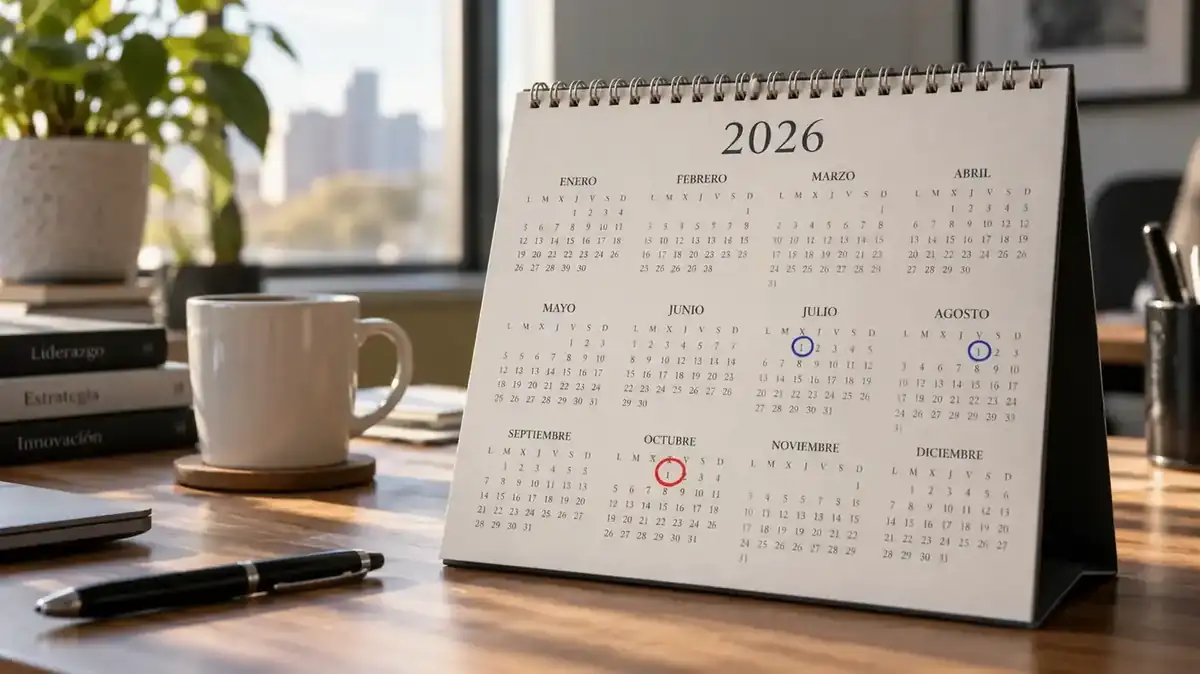
It’s important to know this, because it allows you to budget wisely. Meta can only adjust prices four times a year: on January 1, April 1, July 1, and October 1. And it agrees to give at least one month’s notice if it changes a rate, and three or six months’ notice if it changes the pricing model.
For Spain, the change on July 1, 2026, involved an increase in the rate for marketing messages. As of October 1, Spanish rates for marketing, utility, and authentication remain unchanged: what has changed is that several markets are no longer part of regional groups and now have their own rates, including Kuwait, Morocco, Oman, Ukraine, and Kazakhstan, where rates are increasing, and Bangladesh, Iraq, Nepal, and Sri Lanka, where rates are decreasing.
How Your Bill Changes Depending on How You Use WhatsApp
This is where the general headline stops being useful. The impact depends entirely on how you use the channel.
The company that recruits
It runs ads to attract potential customers and responds to every inquiry it receives. This is the case, for example, with a training company that invests in advertising to attract students: each ad generates anywhere from dozens to hundreds of requests for information every day, all of which must be qualified one by one until the student enrolls.
If those conversations stem from a Click-to-WhatsApp ad, a large part of the qualification process takes place within the 72-hour free window, so high volume doesn’t automatically translate to a high bill. What you should check, however, is what happens when a conversation comes through another channel in your marketing mix or extends beyond those 72 hours: after that point, each response counts as a service message. You can see how we approach this in our WhatsApp Business service for lead generation.
The company that sends a lot of notifications
Online store, workshop, clinic, delivery company. You send order confirmations, appointment reminders, and shipping notifications. Many of these messages appear as helpful templates right after a customer messages you—that is, within the chat window.
This is the most common scenario, and for a specific reason: the 1,000-free-message allowance does not cover utility templates. You’re charged starting with the first one, at €0.0166 each in Spain. If your operations relied on those free messages within the time window, you’ll notice the change starting on the first day of October. If you sell online, we go into more detail in our WhatsApp Business service for e-commerce.
The company that goes the extra mile
Support, after-sales service, answering questions. Almost everything you send consists of free-form responses within the window that opens for the customer.
This is the profile that’s least affected—and often the one that frets the most. With 1,000 free service messages per month per number, a company that handles a few dozen conversations a day will likely stay below the threshold. The key factor isn’t how many conversations you have, but how many messages you send in each one: a conversation resolved in two replies uses one-fifth as many messages as one resolved in ten. If customer service is your priority, we’ve built this into our WhatsApp Business service for customer service.

The company that runs campaigns
Mass customer acquisition, promotions, and reactivating inactive customers. The bulk of the expenses goes toward marketing, at €0.0585 per message in Spain, plus any additional fees charged by the platform you use, and that rate will not change in October.
With one important caveat: what does change is the conversation that follows. When someone responds to a campaign, that response opens a window, and what you say in that window matters. The cost of a campaign is no longer just the cost of sending it; it now includes the conversation it generates. If advertising is your main strategy, you can find more details in our WhatsApp Business service for advertising.
The company that does not yet use the API
You’re considering taking the plunge or budgeting for next year. The good news is that you have the complete model laid out in front of you, without having to make any adjustments along the way.
What to factor into your budget: The rate varies depending on the recipient’s country and the message category; in addition to Meta’s rate, you’ll need to add whatever your platform provider charges, which is a separate layer; and the actual cost depends less on the number of customers than on how many messages you need to resolve each conversation. You can explore the full platform on our WhatsApp Business Platform service.
What to Do Before October 1
If you’re already using the API
Start with the administrative tasks: Make sure you have a valid and verified payment method on file by September 30.
Next, do the math before you decide. You’ll need two figures that are already available on your platform: how many service messages you send per month per number, and how many utility templates are sent within the window. With those two figures, you’ll know whether the change affects you or if you’ll stay within the free tier. If you have technical access, Meta’s pricing analytics field and status webhooks already provide that information today: free messages are marked as non-billable with a service or utility category.
Take this opportunity to also check that your templates are categorized correctly, or whether the focus of your marketing templates should be adjusted slightly to make them more useful. Since marketing costs more than three times as much as it brings in, a misclassified template is money down the drain every month.
If you’re not using it yet
Don’t let this ad influence your decision. Instead, change the criteria you use to make it: budget based on messages sent, not conversations, and evaluate any vendor proposal by separating Meta’s fee—which is the same for everyone—from the markup each vendor adds.
A note on automatic replies
Responses generated by Meta’s proprietary artificial intelligence agent are billed differently—based on tokens consumed rather than on a per-message basis.

Two points to keep in mind. If you respond using a third-party AI tool, the message is still considered a standard service message and is billed as such, in addition to whatever the tool itself costs. And the same message is never billed twice: it’s either a service message or a message from a Meta agent. We’ve covered this in our guide on the costs of each AI option in the WhatsApp Business API, and in our guide on optimizing an AI chatbot on WhatsApp, we explain how to reduce its resource consumption.
What you need to know is that Meta is supporting the development of its own AI, so it will always give an advantage to those who choose its own tools over third-party ones.
How much will your WhatsApp Business API bill go up?
Since October 1, Meta charges for service replies. Enter the figures for a typical month and see right here how much your bill changes.
Preguntas frecuentes
¿Este cambio afecta a la app gratuita de WhatsApp Business?
No. Los nuevos cargos se aplican solo a la WhatsApp Business Platform, la API. Si atiendes desde la app gratuita instalada en un móvil, o desde WhatsApp Web, no cambia nada para ti.
¿Cuánto cuesta un mensaje de servicio en España?
0,0166 € por mensaje entregado, la misma tarifa que una plantilla de utilidad. Cada número de empresa tiene 1.000 mensajes de servicio gratuitos al mes, y el cobro empieza en el 1.001. A eso hay que sumarle el margen que aplique tu proveedor de plataforma.
¿Desaparece la ventana de 24 horas?
No. La ventana sigue funcionando igual: se abre cuando el cliente te escribe y se reinicia con cada mensaje suyo. Lo único que cambia es que responder dentro de ella deja de ser gratuito.
¿Pago aunque no use el agente de IA de Meta?
Sí. El cambio de octubre se aplica a todas las cuentas de la API, uses o no el agente de Meta. Si respondes con una persona o con una IA de terceros, se factura como mensaje de servicio.
¿Las tarifas son iguales en todos los proveedores?
La tarifa de Meta sí: es idéntica en Woztell, Blip, Spoki o cualquier otro BSP, y no se negocia. Lo que varía es el margen que cada proveedor añade encima. Por eso conviene pedir siempre el precio desglosado.
¿Tengo que hacer algo antes del 1 de octubre?
Dos cosas. Comprobar que tienes un método de pago válido y verificado en la cuenta, y medir cuántos mensajes de servicio y cuántas plantillas de utilidad envías dentro de la ventana cada mes. Con esas cifras sabrás si el cambio te afecta de verdad.
Lessons on WhatsApp Business’s Price Changes
This change doesn’t make WhatsApp an expensive service. In Spain, rates aren’t even going up in October: it simply puts a price on something that used to be free.
This rewards those who resolve issues in fewer messages and penalizes those who drag out conversations. In other words: starting in October, a well-designed workflow will no longer be just a matter of customer experience—it will also be a matter of cost and margins.
At Reinicia, we’ve been implementing the WhatsApp Business API with small and medium-sized businesses for years, and the pattern is always the same: most high bills aren’t due to high volume, but rather to conversations that require ten messages to accomplish what could be done in three.
And if you’re looking to reduce that cost without compromising the quality of customer service, we walk you through it step by step here: How to Reduce the Cost of the WhatsApp Business API.
How much will you be paying starting in October?
Don’t just guess. We’ll work with you to review your actual message volume, tell you exactly how much it will cost, and identify what can be adjusted before you receive your first bill. No strings attached and no gimmicks.
About the sources for this article
All rates and tiers are taken from Meta’s official pricing sheet in euros for the WhatsApp Business Platform, effective July 1, 2026, and from Meta’s official pricing document for developers, accessed on September 9, 2026. Meta only updates these rates at the beginning of each quarter, so it’s a good idea to check the current price list before making any budget decisions.