Index
What is Conversational Marketing?
If you have a business, you probably already know how difficult it is to capture the attention of your customers. People are saturated with advertising and find it increasingly difficult to trust brands. This is where conversational marketing comes in, a completely different way to connect with your customers.
Instead of bombarding them with ads that no one wants to see, conversational marketing creates real conversations, in real time, as if you were talking face-to-face with each person. It’s like going back to the commerce of a lifetime, but using the tools of the 21st century.
Think of it this way: when someone walks into your physical store, you greet them, ask them what they’re looking for and help them find it. Conversational marketing does exactly the same thing, but in the digital world. Through chats, WhatsApp, social networks or chatbots, you can have those personal conversations with hundreds or thousands of customers at the same time.
WhatsApp has more than 2 billion users and an open rate of more than 90%.
The numbers don’t lie: WhatsApp has more than 2 billion users and an open rate of over 90%. When you implement conversational marketing well, you not only improve your customers’ experience, but also increase your sales considerably.
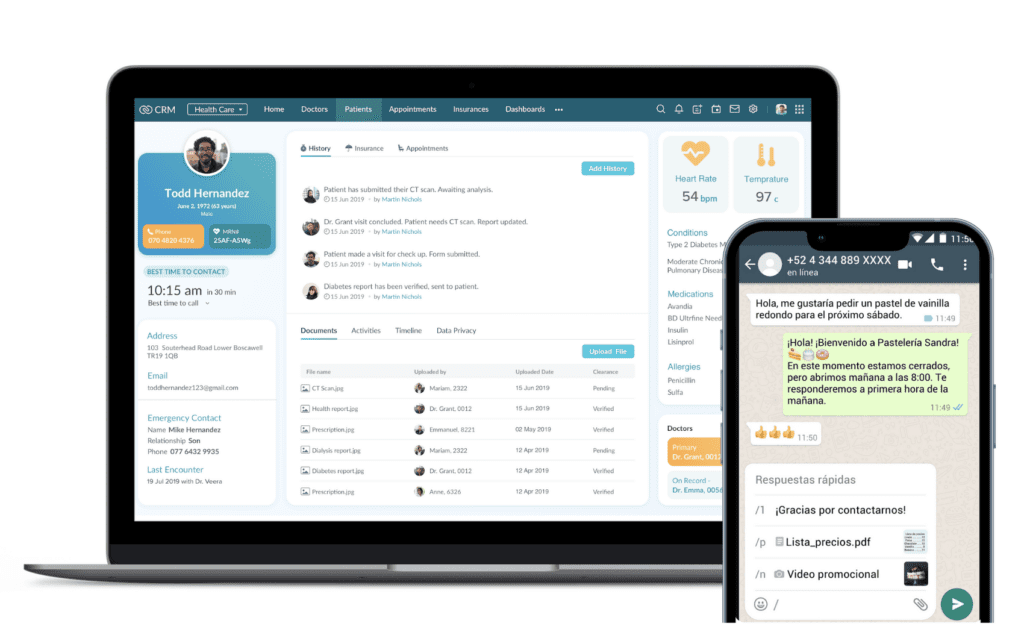
Definition of conversational marketing
What is conversational marketing: it is a strategy that puts your brand and your customers to talk directly, in real time, so they can solve their doubts and make purchasing decisions faster.
Unlike traditional marketing, which is one-way (you talk, they listen), conversational marketing is two-way. Your customers can ask you questions, you can answer, they can comment, creating a real conversation that builds trust.
The key is immediacy and personalization. When someone has a question about your product, they don’t have to wait hours for an email response. They can write to you via WhatsApp and get an instant response. If they are comparing prices, you can offer them a personalized discount right then and there.
Conversational marketing also leverages artificial intelligence to be more efficient. Modern chatbots can carry on very natural conversations, answer frequently asked questions and, when the situation calls for it, pass the conversation to a real person.
What makes conversational marketing special is that it turns every interaction into an opportunity to learn more about your customers. Every question they ask, every doubt they express, gives you valuable information to improve your product or service.
According to recent studies, 50% of sales go to the brand that responds first. This means that if you implement conversational marketing well, you have a huge competitive advantage over those who continue to use traditional methods.
Main channels: chatbots, WhatsApp, and more
Conversational marketing works through different channels, each with its own advantages depending on the type of business you have.
- WhatsApp Business, the king of messaging: WhatsApp has become the preferred channel for many businesses, especially in Spain and Latin America. With WhatsApp Business API you can automate responses, send product catalogs, confirm orders and provide post-sales follow-up. The advantage is that people already use WhatsApp every day, so they don’t have to learn anything new.
- Chatbots on your website, available 24/7: a chatbot on your website can serve visitors 24 hours a day. It can answer frequently asked questions, help find specific products, collect contact data and even process simple orders. Modern chatbots with artificial intelligence can have very natural conversations.
- Social media, where your audience is: Facebook Messenger, Instagram Direct and X are great for conversational marketing. People are used to private messaging brands when they have questions. You can automate basic responses and have a real person for more complex cases.

- Smart email, beyond spam: although it may not seem like it, email can also be conversational. Instead of massive and impersonal newsletters, you can send messages that invite replies and create a real dialogue with your subscribers.
- Live chat, the human touch: for more complex products or services, nothing beats a real-time conversation with a person. Live chat on your website can be the deciding factor in closing an important sale.
- SMS and push notifications: for urgent communications such as order confirmations, appointment reminders or flash offers, SMS and push notifications are still very effective.
- Voice assistants, the future is here: Amazon Alexa, Google Assistant and Siri are opening up new possibilities for conversational marketing. Some companies already allow voice-only ordering.
The key is to be present in the channels that your audience really uses, not in all the existing ones. But the main question we should ask ourselves is:
What is the best chatbot for my company?
All of them have similar characteristics, but what is inevitable is that Whatsaspp, -at least in Spain- is one of the most used tools by users.
In addition, if you have Whatsapp Business API installed you can store all conversations with tags, dump product catalog, or respond through AI recommending products or services and qualifying automatically, among many other peculiarities.
Benefits for marketing, sales and customer service
Implementing conversational marketing in your business brings concrete benefits that you can measure from day one.
For your marketing team: conversations give you real-time information about what your customers really want. You can find out what questions they have, what stops them from buying, what words they use to describe your products. This information is pure gold for creating content, improving your campaigns and developing new products.
You can also segment your audience much better. If someone asks for specific products, you automatically know they are interested in them and can include them in highly targeted campaigns.
Now you no longer pay for traffic, you pay to start conversations. It is increasingly common to pay for users who want to talk to you or show interest and not so much traffic -generally unqualified-.
Now you no longer pay for traffic, you pay for initiating conversations.
For your sales team: conversational marketing generates much more qualified leads. When someone has had a conversation with you, they already know your brand, have had their initial questions answered and are much closer to buying. This means your sales team can focus their time on closing deals instead of educating from scratch.
In addition, you reduce the sales cycle. Instead of days or weeks to solve doubts by email, you can do it in minutes by chat. Immediacy works in your favor because it takes advantage of the moment of greatest customer interest.
For customer service: chatbots can resolve up to 80% of the most common queries without human intervention. This frees your team to focus on more complex cases that really add value. The result is happier customers and a less cluttered team.
Measurable benefits you’ll see quickly: companies that implement conversational marketing report 25% to 40% increases in conversions.
You also reduce operating costs because you automate many repetitive tasks. A chatbot can serve hundreds of people simultaneously, something impossible for a human.
Customer satisfaction improves because they receive immediate answers instead of waiting hours or days. And when they do need to speak to a person, they arrive with prior information, which makes the conversation more efficient.
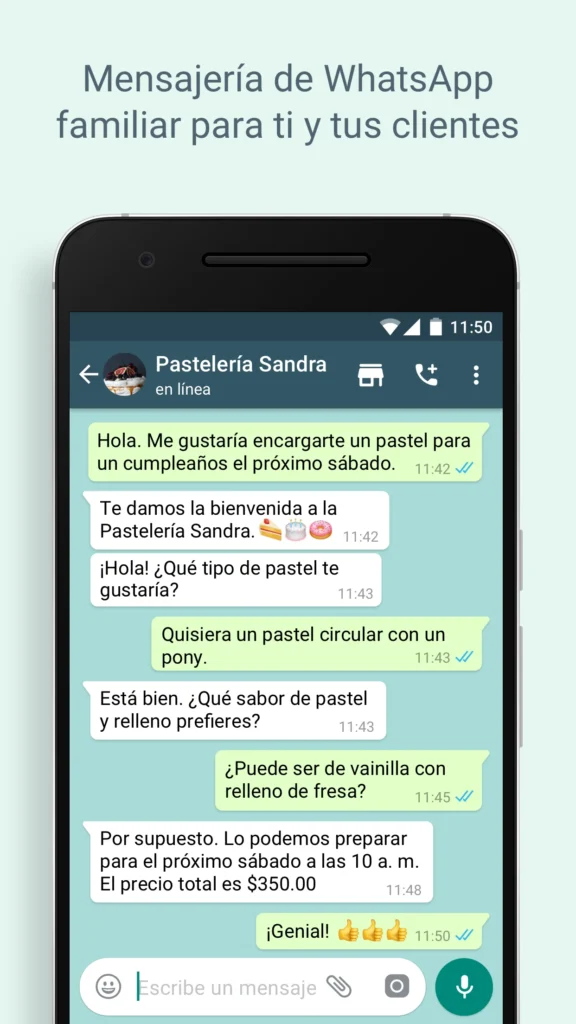
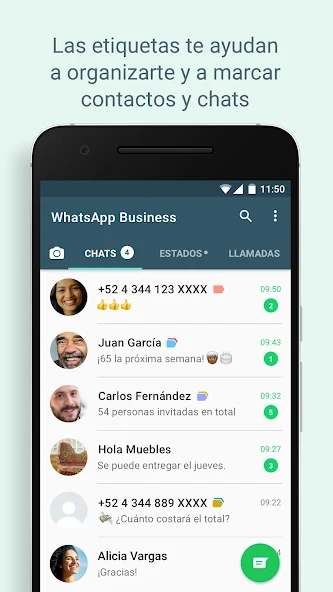
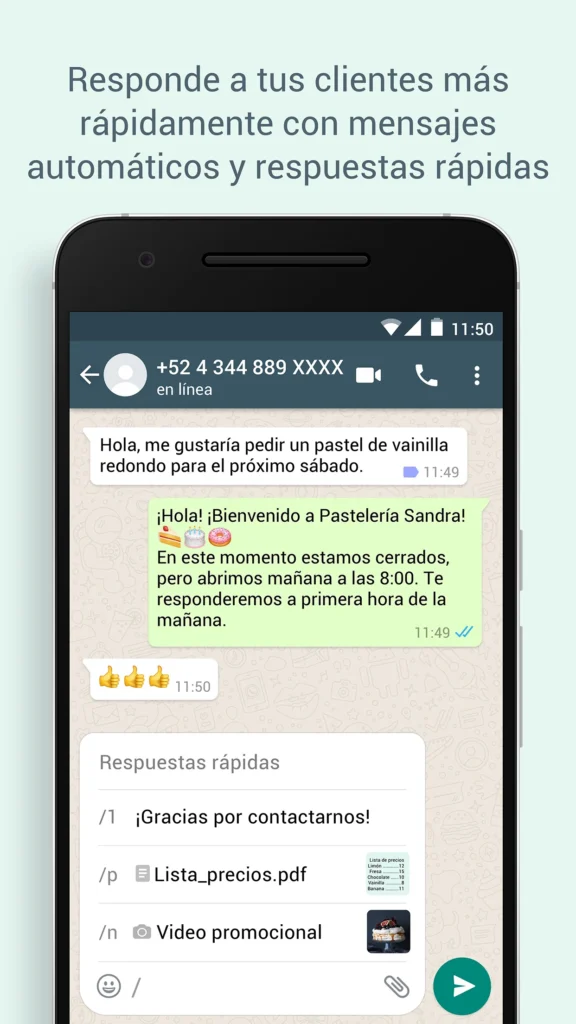
Examples of conversational marketing strategies
To show you the real potential of conversational marketing, I am going to tell you some examples of conversational marketing that are working very well.
- Ecommerce, from doubt to purchase in minutes: an online fashion store implemented a chatbot that asks, “Are you looking for something specific?” when someone visits the website. Depending on the answer, it displays personalized products and can answer questions about sizes, colors or availability. If the customer hesitates, the bot offers instant discounts or free shipping.
- Restaurants, frictionless reservations: a group of restaurants connected WhatsApp Business with their reservation system. Customers can check availability, make reservations, modify or cancel them, all via WhatsApp. They also send the menu of the day, special promotions and automatic confirmations.
- Professional services, automated lead qualification: a consultancy implemented a chatbot that asks key questions to understand the potential client’s needs. Based on the answers, the bot schedules a call with the right consultant and sends the relevant material to the person in charge. The team only receives qualified leads.
- Health and beauty, 24/7 consultations: a dental clinic allows initial consultations via WhatsApp. Patients can send photos, describe symptoms and receive basic guidance. For urgent cases, the system schedules priority appointments automatically. For routine consultations, it offers instantly available schedules.
- Real estate, qualified visits: a real estate company implemented a system where interested parties can consult properties via WhatsApp. The bot asks for a budget, preferred area, type of property and schedules visits only with qualified clients. Result: 80% fewer missed visits and more productive agents.
- B2B companies, automated demos: a SaaS software company created a wizard that qualifies leads by asking about company size, budget and specific needs. Based on the profile, it schedules personalized demos or sends targeted materials. Only high-potential leads reach the sales team.
What all these examples of conversational marketing have in common is that they remove friction from the buying process, provide immediate answers and personalize the experience for each customer. Conversational marketing is not just a fad, it is the natural evolution of business communication. In a world where attention is the scarcest resource, brands that manage to have real and valuable conversations with their customers are the ones that will survive and grow. The technology is ready, the tools are available, you just need to make the decision to start.
In Reinicia we are specialists in Whatsapp Business API