Index
If you’re looking for a CRM for your company, you’ve probably already come across two names that keep popping up: Zoho CRM vs Salesforce. They are two giants in the world of customer relationship management, but each has a very different approach.
The choice between Zoho CRM vs Salesforce is not just a matter of features, but of understanding which is better suited to your business, your budget and your team.
While Salesforce has positioned itself as the “premium” option in the market, Zoho CRM is presented as a more accessible and easy to use alternative. In this Zoho CRM vs Salesforce comparison we will analyze everything you need to know to make the right decision in 2025. From features and pricing to ease of use and integrations, we’ll help you understand which of these CRMs best fits your company’s specific needs. And if you need more information than what’s shown in this article, it’s best to consult an official Zoho CRM partner for direct clarification.

Comparison of key functionalities
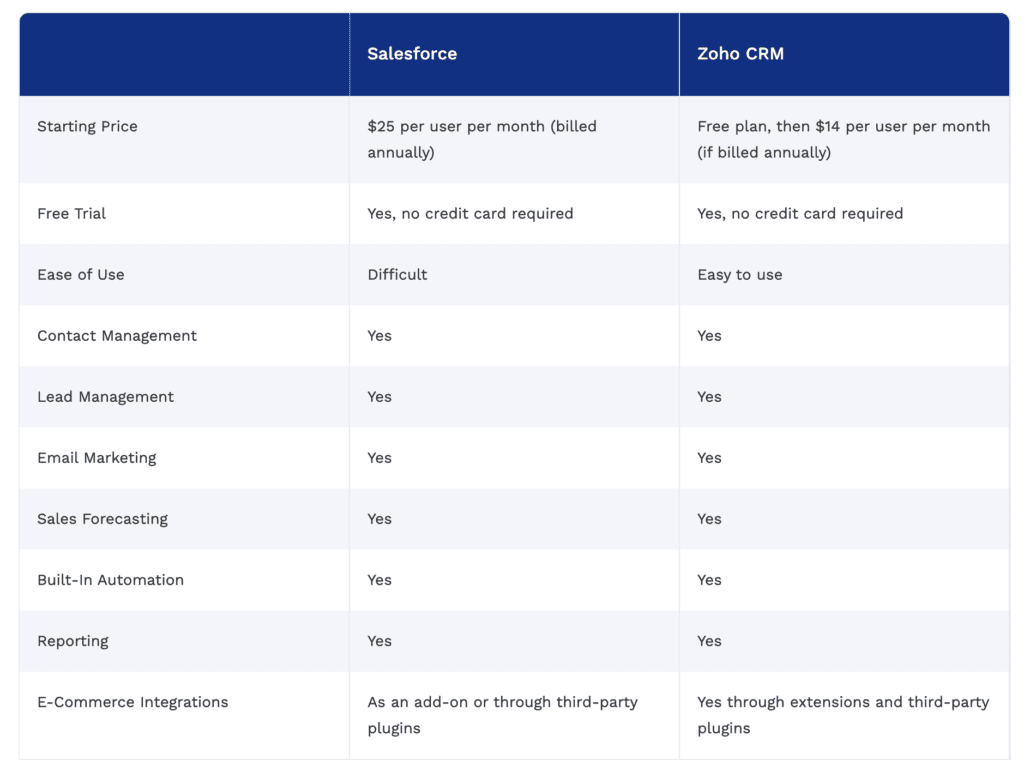
When comparing Zoho CRM vs Salesforce in terms of functionality, both offer robust features, but with different approaches.
- Lead management and sales: Salesforce offers basic tools for capturing, qualifying and nurturing leads, but lacks some key features such as an integrated card reader and only has a basic web capture feature. In contrast, Zoho CRM provides a more comprehensive set of tools, including business card scanning in its mobile app, speech-to-text notes and multiple options for capturing leads from different channels.
- Artificial intelligence: Salesforce boasts Einstein AI, which can generate lead scores, automate tasks and predict sales. However, Einstein is limited to certain components and requires a lot of customization for tasks that Zia (Zoho’s AI) offers as standard. Zia can identify the best leads, predict sales, detect anomalies, and even dictate notes so reps don’t have to type everything manually.
- Automation and workflows: Both CRMs offer automation capabilities, but Zoho CRM tends to be more intuitive. While Salesforce can automate complex processes, it often requires advanced technical knowledge or a dedicated implementation team. Zoho CRM allows non-technical users to create effective automations with its drag-and-drop interface.
- Reporting and analytics: Salesforce offers advanced analytics with tools such as Einstein Analytics, but many analytics features come with additional costs. Zoho CRM includes detailed analysis of lead and sales rep performance through KPIs, funnels, target metrics and comparators, all included in its standard plans.
- Integrated marketing: a key difference in Zoho CRM vs Salesforce is that Zoho includes email marketing, campaign lead assignment and customer segmentation features at no additional cost. In Salesforce, many of these features require paid add-ons such as Marketing Cloud or Pardot.Ease of use: this is where Zoho CRM really shines. Salesforce has an overloaded interface that lacks the modern feel that users expect from SaaS, and requires a lot of customization to use effectively. Users constantly have to switch between the old interface and the new Lightning interface. Zoho CRM offers a more unified and modern experience from day one. automation capabilities that are not available in the standard version.
Price comparison and scalability
Hidden and additional costs: this is where the difference between Zoho CRM vs Salesforce becomes more evident. Salesforce has many add-ons that can skyrocket costs – Marketing Cloud, Service Cloud, Commerce Cloud, Einstein Analytics, etc. Each comes with significant additional costs.
Zoho CRM includes many features that in Salesforce require paid add-ons. For example, marketing features, advanced analytics, and many integrations are included in Zoho’s standard plans. In the following link you can compare quotes on a per user basis.
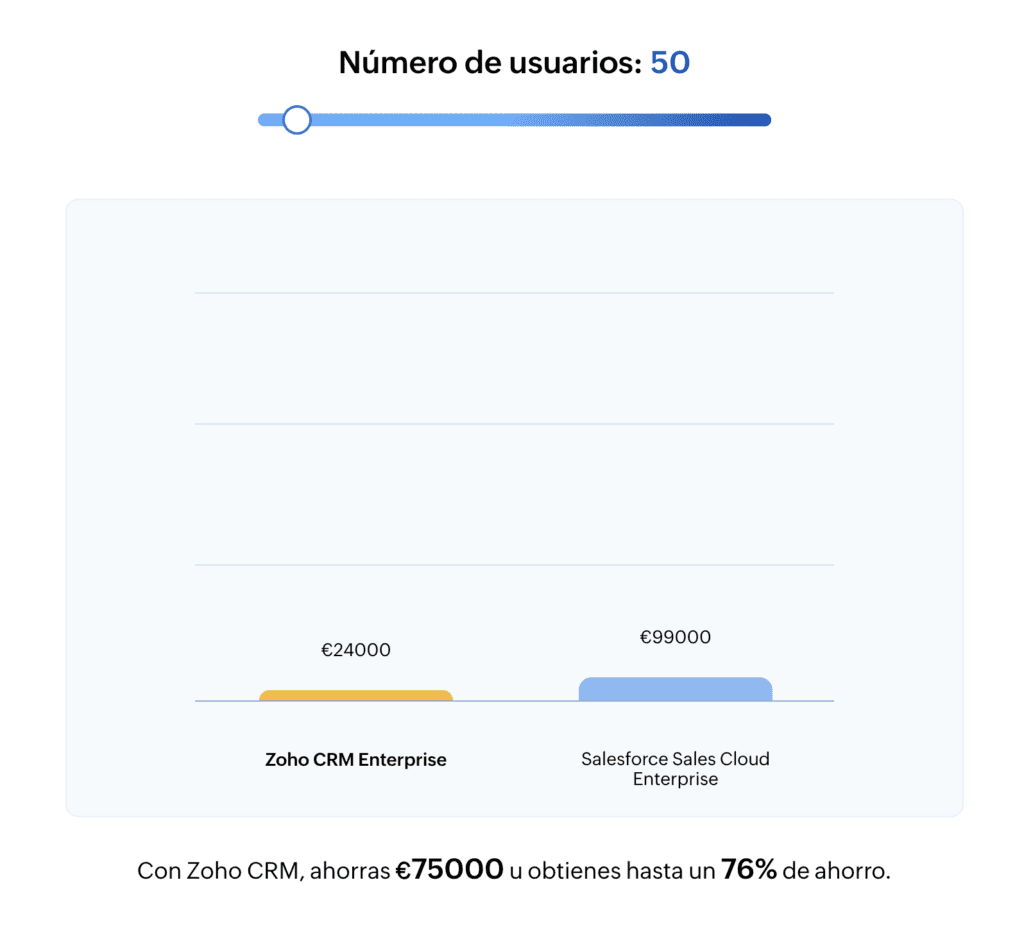
Economic scalability: For small and medium businesses, Zoho CRM is clearly more economically scalable. A company can start with the free plan and grow gradually. With Salesforce, costs can quickly become prohibitive when you need to add additional functionality.
Contractual flexibility: Zoho CRM operates on a pay-per-use model (monthly or yearly) with no long-term contracts. You can switch plans whenever you need to. Salesforce generally requires annual contracts for all of its plans except the Starter Suite.Technical scalability considerations: Both CRMs can handle large enterprises, but Salesforce has traditionally been better for very large corporations with extremely complex processes. However, Zoho CRM has closed this gap significantly and now successfully caters to larger enterprises.
Integrations and ecosystem
The ecosystem of integrations is crucial when choosing between Zoho CRM vs Salesforce, as it determines how well your CRM will connect with the rest of your company’s tools.
Ecosystem: Zoho CRM is part of an ecosystem of more than 45 integrated business applications. This includes Zoho Books (accounting), Zoho Desk (customer support), Zoho Projects (project management), Zoho Mail, Zoho Analytics, and many more. The advantage is that all of these applications are designed to work together seamlessly.
Salesforce has a broader ecosystem that includes acquisitions such as Slack, Tableau, MuleSoft and Heroku. However, these integrations often come with significant additional costs. The Salesforce AppExchange has thousands of third-party apps, but many require separate subscriptions.
Native integrations: Zoho CRM natively integrates with over 1000 applications, including Google Workspace, Microsoft Office 365, Mailchimp, QuickBooks, and many more. These integrations are included in the standard plans.
Salesforce also offers extensive integrations, but many of the “premium” integrations require paid add-ons. For example, for advanced social media features you need Social Studio, for live chat you need Digital Engagement SKU.
APIs and customization: Both CRMs offer robust APIs for custom integrations. Salesforce has a historical advantage in extreme customization, especially for large corporations with dedicated development teams. However, this comes with additional complexity.
Zoho CRM offers more accessible customization tools, including Deluge (its scripting language), codeless workflows, and custom fields that are easier for non-technical users to implement.
Marketing integrations: Zoho CRM includes marketing integrations at no additional cost, while Salesforce requires Marketing Cloud (which can cost as much as the core CRM) for similar functions.
Data migration: Zoho CRM offers free migration services from Salesforce and other popular CRMs, including a “Jumpstart” service that covers everything from requirements gathering to full configuration.Marketplace and extensions: the Zoho Marketplace has over 900 easy-to-install third-party extensions. Many are free or low-cost. The Salesforce AppExchange is larger but generally more expensive.
Which one to choose according to the type of company
The decision between Zoho CRM vs Salesforce depends largely on the type and size of your company, as well as your specific resources and objectives.
Small businesses and startups: for companies with 1-50 employees, Zoho CRM is generally the best option. Its free plan for 3 users is perfect for getting started, and the paid plans are much more affordable. The learning curve is lower, which means you can start seeing results quickly without the need for a dedicated technical team.
Midsize companies (50-500 employees): this is where the competition between Zoho CRM vs Salesforce becomes more interesting. Zoho CRM is still cheaper and easier to implement, but Salesforce offers some advanced features that can be valuable. However, studies show that 99% of the customizations that midsize companies need can be achieved with Zoho CRM at a fraction of the cost of implementing Salesforce.
Large enterprises (500+ employees): traditionally, this was Salesforce territory, but Zoho CRM has gained significant ground. Companies like Mercedes-Benz India and Marathon Realty have successfully migrated from Salesforce to Zoho CRM, reporting better usability and significantly lower costs.
Sales-focused companies: If your company is primarily focused on direct sales, Zoho CRM offers more intuitive tools for sales reps. The mobile app is superior for field sales teams, with features such as card scanning and voice memos.
Companies with integrated marketing needs: Zoho CRM includes marketing features that in Salesforce would require Marketing Cloud (significant additional cost). If you need email campaigns, customer segmentation and marketing automation, Zoho is a more interesting option.
Highly regulated companies: both CRMs comply with security standards such as GDPR, HIPAA and SOC 2. Salesforce has a slight advantage in very specific compliance functions for companies in highly regulated industries such as financial services.
Companies with limited technical teams: Zoho CRM is clearly superior for companies without dedicated technical teams. Its interface is more intuitive and customizations can be made without programming skills. Salesforce often requires external developers or consultants.
Companies with tight budgets: here Zoho is clearly the winner, with costs at all levels much lower than Salesforce.
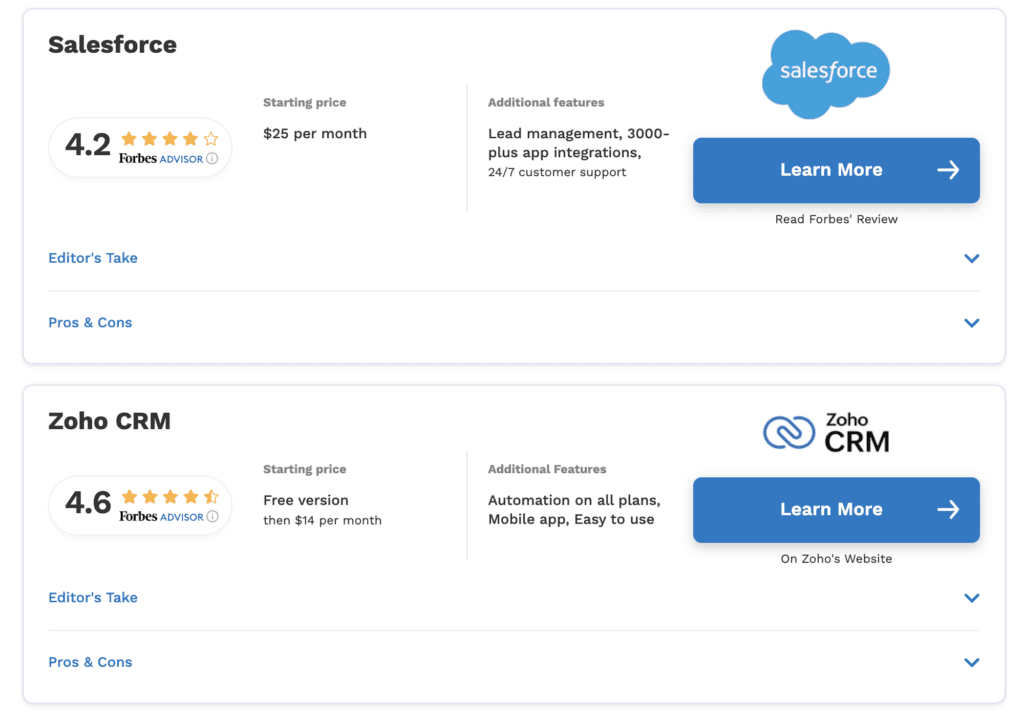
In summary, Zoho CRM vs Salesforce is not a decision based solely on functionality. Zoho CRM offers better value, ease of use and more predictable costs, while Salesforce may have advantages in very specific cases of extreme customization for large corporations. For most companies in 2025, Zoho CRM represents a smarter, more cost-effective choice.